
Yesterday morning, the air in Sheffield smelled of moorland smoke. A great swathe of our National Park has been burning and continues in places to smoulder, set alight by fireworks, it would seem, though the preparatory work of heat and drought was done by all of us, year after year, with our relentless carbon emissions.
Today, the blue sky (and how tired we are of blue sky) is oddly muted, as if a thin white veil has been drawn across it. This is the result, the Met Office tells us, of smoke crossing the northern hemisphere from catastrophic forest fires in Canada.
Five minutes ago, I read that most of England and Wales are closer to drought status. The ground is parched, the fields are browning, trees that have endured three previous droughts in the last eight years are visibly stressed. And so are we: millions of us, nursing our ecological grief. The present looks and feels, already, like the future that we used to speak of with apprehension. It is here - and how much harder that is to bear when our political class is either in (well funded) denial about the problem or running scared from talking about it, persuaded by pundits and consultants that acting on climate change is a vote loser.
My own mental health has suffered. I’ve been living with climate anxiety for years, and my last serious depressive episode took place in a heatwave summer like this one. Ecological grief is bound up with personal loss, as I’m working to process the death of my father - that irrepressible optimist - and my orphaned status, one day before I hit fifty. Would I be more robust in my grief if we still enjoyed the climatic stability of the world in which I was born?
I’ve been trying to write about all of this for years now. George Monbiot was kind enough to call my novel The Devil’s Highway ‘the best treatment of climate change in fiction’, though I’m not sure it deserves the accolade. The problem is that the novel offers very little in the way of hope. (It’s my farewell to the landscape of my childhood, which in the present drought I dare not revisit.) Dystopia is, arguably, easier to imagine that a world in which we have come through. Such a scenario needs imagining, however, because we are not doomed yet. We have all the technologies we need, and increasingly the know-how, to avoid the worst and to begin the ‘cathedral-thinking’ intergenerational work of planetary restoration.
What follows is my attempt at imagining such a world: the new, compromised, imperfect garden we might grow in the ashes. It’s a story of sorts, although rather lacking in narrative. Is it an essay, a thought experiment - a dream? I’m not sure it succeeds as literature, but I want to share it with you at this particular moment, if for no other reason than in the hope that it might leave you and me feeling a little less alone.
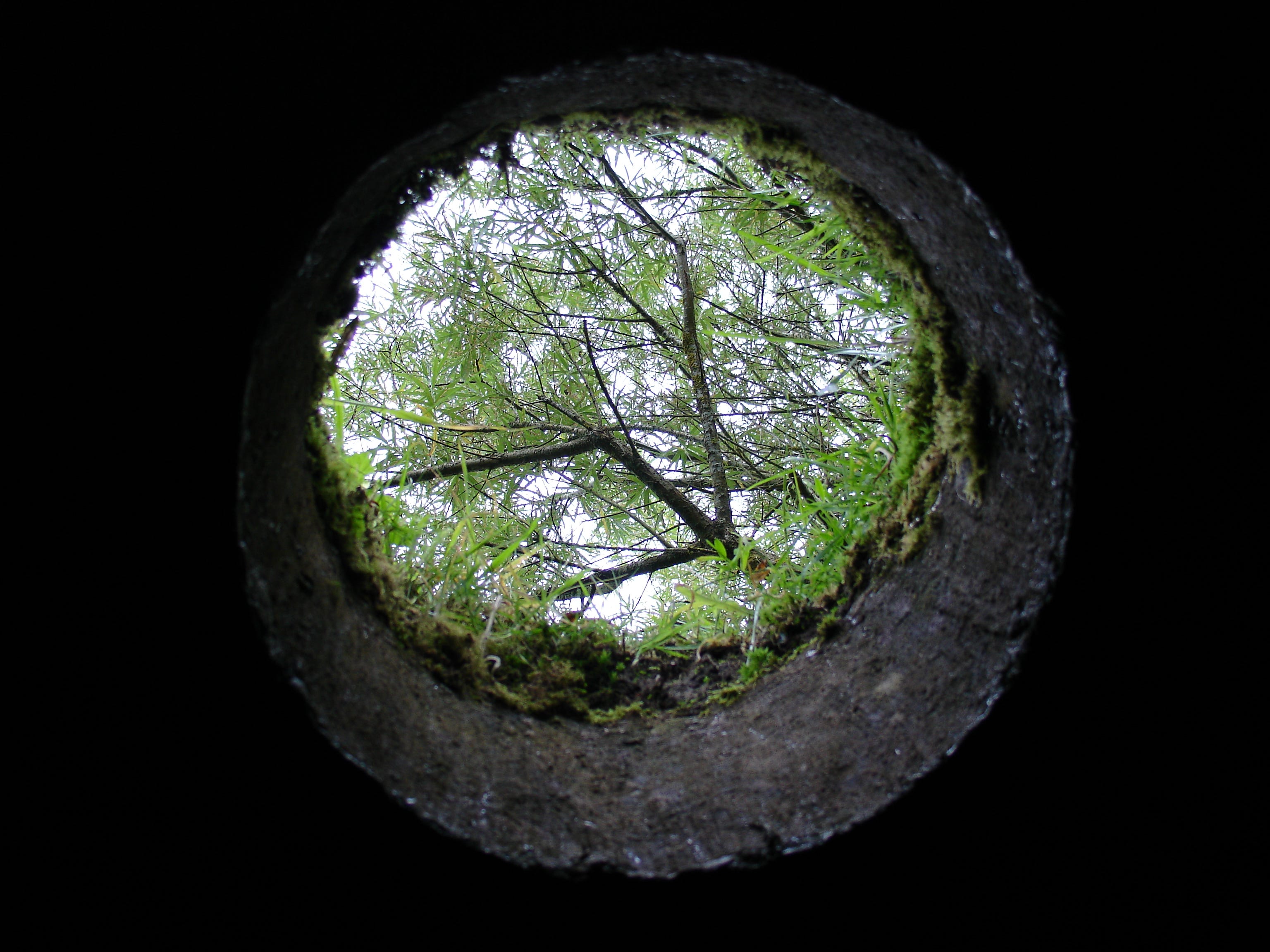
The Milder Sun
I am Sara, granddaughter and great-granddaughter of climate refugees, child also of the ancient Cymraeg; third-generation Wiccan of the Chwaeroliaeth Bloden, or Flower Sisterhood, of Powys; wife to Abidemi, mother to Ayo and Owen, grandmother to Bryn, Nura, Angharad, Saad and Willow. I dwell in the community of Der Newydd, between the wooded hills of Powys and the water-meadows of Afon Hafren which the English call the River Severn.
Today is Midsummer, the first of the century. I began it as I try to begin all my days, in meditation, but my grandchildren interrupted me. I gave Bryn and Nura their breakfast, walked them to school (they are staying with me while their father is away with the wolves on Eryri), then tidied my rooms in the Bloden Lodge where for twenty years I have lived and done my work.
I am a healer. I learned to observe and to listen from my father, who worked as I do to understand the brokenness that can spread, like a crack in an eggshell, through the lives of individuals and families. From my mother and grandmother I leaned the properties of plants. I try to keep the cracks from spreading, to heal the diseases of the mind and body. This is one role among many required for the Thriving: teachers, gardeners, builders, rangers, food engineers, birth doulas, death doulas, storytellers – makers and remakers of the world.
I have few patients to see today, and all are more in need of being heard than medicated, for while our community has overcome many things, human error and ordinary weakness will always be with us. Before my first appointment, I wander down to the forest garden to water Abidemi’s tree and meet her in its budding leaves. Soon my remains will join hers, both of us returning to the world what we borrowed from it in order to live. I grieve for her. Some days I wake in anguish, terrified by loss. But tonight will be joyful. Tonight is Midsummer Gathering, when our community will meet to cheer and sing the Love Clowning that welcomes our young into adulthood. And we will remember what must be remembered. For my ancestry, which will in part be yours, is rife with dispossession and loss. The Norman and the Mongol invasions, the wars for oil and the wars for god. Lands stolen, tongues silenced. Finally, the droughts and heatwaves that drove my Iraqi forebears north – and what violence they met with.
But this is not the place to rehearse the near-infinite wrongs done in the names of security, law or nation. My purpose is to record the happier story that every child learns at school, in worship, in Sim. We take care to rehearse this story through art and ritual, to bring its lessons into our bodies so that they cannot be forgotten. Yet history teaches us that all things fade; the Universe itself will grow dark and disordered. And so I unfurl this scroll of vellum that my daughter gave me. Ayo accompanies the land-shaping cattle in Bannau Breicheiniog. Last summer a matriarch of the herd died; her hide is strong, supple, fragrant. As I weigh it down with pebbles, I consider how medieval scrolls survived the London Floods when Parliament’s paper codices did not. I think, as we are trained to do, of preservation and loss. Though much is stored in the Libraries of Sim, most of the early Internet has vanished. We cherish books and scrolls, the printed and the handwritten word, knowing that old technologies sometimes outlast the new.
I am sitting at my desk in the Bloden Lodge, in the apartment where Abidemi and I lived and loved. The day is hot but not unbearably so. Looking out, I see a dancing mist of insects above the meadow, bright against the darkening foliage of the woods. I feel as every day the murmur of grief in my belly. I have seen my two patients, one of them in the early stages of a curable cancer, the other afflicted with a crippling anxiety. I have danced and breathed away the hurt that I took from them, as I would the burrs that stick to my clothes when I walk in the hills. I need a light heart and a clear head to write these words for you.
I have chosen to use oak gall ink. We are rich in Welsh oaks here, many of them planted at the start of the last century when the work of carbon drawdown was beginning to bear fruit. It was Abidemi who made the ink. She was a bookbinder and a silversmith. Her fingers were clever as mine are not. Now that she’s returned to Earth and is becoming tree, flower, bird, I want to put her gift to use: to write this testimony about how we survived our appetites and ceased to wage war on the world and ourselves.
*
Two centuries ago our planet was locked, seemingly inexorably, in what we call the Locust Years. The intentions that had led to the great devouring were not all ignoble. Billions had been lifted out of absolute poverty by fossil fuels and everything they enabled. But it was ancient power, stolen from the bosom of Earth where she had sequestered it for millions of years, and loosening it broke the balance of the world. A terrible and – at first – entirely accidental experiment in atmospheric chemistry was conducted on all living beings.
The biosphere is ruthlessly coherent. It rations life for the individual to maximise it for the totality of living things. Humanity’s foundational and entirely natural sin was our compulsion to reverse that formula. And so the carrying capacity of our planet – the only known refuge for life in the Universe – was stretched to breaking point. Weather systems warped and buckled; soils, overworked, began to fail; the oceans acidified; a great silence spread across what had been the wild places of the world. Most governments and corporations, and the media empires that existed to further their interests, tried at first to ignore what was happening, to deny it, to spread confusion, and thus to delay a transition that threatened what they perceived to be their wealth. These efforts met in many quarters with willing collaborators, for a civilisation with a pathological inability to contemplate its mortality will spawn morbid symptoms. People so feared positive change, clinging to what hurt them, that negative change – Gaia turning on those that abused Her – accelerated at harrowing speed. Still the plutocrats, soaring in their private jets above the burning, fought attempts at evasive action, or indulged in fantasies of technological supremacy, imagining that they could shield themselves behind their quarterly finance reports.
The Locusts seemed unshiftable. Yet as things worsened, those we call Earth Tongues began to cry out in alarm. They were few at first, then a growing chorus. Children refused to attend school, meaning to shame their adults who refused to learn what they had a duty to know. The Locusts, of course – in whose image the world seemed to be made – would not listen, for hunger drove them on. It was not biological hunger, for which no being need feel shame. It was the diseased hunger of people driven by a lack of love and connection. No amount of eating can fill those voids: they seek in taking what can only be found in giving. In the Locust Years, it seemed society lacked the vocabulary even to speak of these things. Cynicism and mockery were the norm; illusion and neurotic distraction were easier than facing reality, and much violence was done to the very notion of truth. The Earth Tongues had to shriek and holler, increasing in volume even as what they feared roared in the ears of all living peoples. How easy it was, as cities choked on wildfire smoke, to despair. Many did. But while we have always been our greatest foe, we are also our only hope.
The struggle was titanic, first to slow the speed of destruction, then to stop and reverse it. For many years it seemed impossible. The graph lines soared towards calamity; forests burned, crops failed, people perished. There were vested interests hindering action. Yet slowly, then less slowly, finally at dizzying speed, these obstacles – technological at first, at last cultural and political – were swept away. Raw economics worked, for once, in Life’s favour. Solar became the fastest growing source of energy in history. Together with wind and geothermal, and batteries to store what they generated, it put out the fossil flames. Transportation, heating, and industry were electrified. Electrons replaced molecules and brutal cartels lost their power – though not without a fight. Within three decades humanity said goodbye to the heat engine that had powered and poisoned it for three centuries.
Technological change was essential to our survival. Some of the Earth Tongues were uncomfortable with this, and the trade-offs it required. They were right that technology alone was not enough. Rather, it bought us time to transform ourselves. Cities became places for people rather than the machines that had seemed to serve us. Most of us became city-dwellers, but what we meant by that had changed, for the humming engine of urban life quietened, with its tree tenants and roof meadows and shaded cycle paths, with its parks and gardens where children could play, its pools and ponds and daylighted rivers, its market gardens and allotments. Food waste became one sin that a post-religious north and a religious south could agree on. Billions switched, or reverted, to plant-based diets as we despaired of the silent springs that our poisons had occasioned, as we became ashamed of our industrial slaughter of our fellow beings. It became possible to produce, from nothing more than sunlight and bacteria, the proteins we needed for a healthy diet. The murderous feedlots, the vast sacrifice zones devoted to feed-crops, were returned to wilderness, and began to draw down some of the carbon that we had unleashed. What the Locusts had, for so long, persuaded the majority meant impoverishment revealed itself to be the opposite: true abundance. The weight of cognitive dissonance that most people had not even realised they carried was lifted from their shoulders. We became a civilisation of gardeners, makers, companions to growing things. There were, after all, entire continents to restore.
There is nothing in this story of the idyll. Nature doesn’t work that way. The horror and the loss, baked in through the years of the Great Burning, continued for generations: droughts, floods, wildfires, the abandonment of coasts and cities. Fascism and genocide overshadowed the bodies politic as swathes of humanity, refusing to stay at home and obediently die, sought refuge in the habitable regions. Among them were my ancestors and yours.
The tragedies of that time must never be forgotten. Alongside this document I bequeath another, already composed by multiple hands: the story of our suffering down the ages. Let these testimonies share one resting place, for the truth of one is braided through that of the other. Both tell the story of your origins. The tragedy has a staying power in the mind that love’s comedy lacks. Drama resides in conflict; story needs friction to heat up the imagination. Yet tragedy is incomplete. Within the familiar contours of the Great Burning, another landscape was evolving, what a twenty-first century philosopher called the Great Turning. Let its hills and valleys beckon you from the slough of despair.
With clean energy abundance and our efforts to lighten our load on the Earth, the forests and great plains returned – a fragment of what they had been, yet treasure-houses, nonetheless. The seas that had overheated, losing oxygen and dissolving shelled creatures, began to breathe and roll again, to team with life. With new food technologies and altered diets, we were able to return vast areas to natural processes. We became symbionts, co-creators in the work of life. Formerly, the Locusts had persuaded people that this would entail poverty and self-denial. We have proved otherwise. Our homes are solid, well insulated, efficient, and clothed in greenness. Our cities are gardens as well as communities of houses and factories, places of worship and entertainment. Politically, we retain the nation state, and supranational institutions for defence and resilience, yet we prefer grassroots democracy for most things. The eco-region speaks more to us than any coloured flag. Money is not permitted in politics: to receive funding from interests of any kind is electorally disqualifying. All legislation is put to the Seven Generations test that the Iroquois used in their deliberations, and in most assemblies something that began its life here in Cymru is enshrined in all legislation: the Wellbeing of Future Generations Act. Many legislatures go further. Natural features, especially those on which all peoples depend – seas, rivers, watersheds – have legal personhood and are, in theory, protected by law. We try to consult the non-human world, to consider what it needs regardless of what might suit us.
It is not that we mistake what used, in the Time of Division, to be called ‘Nature’ for a benevolent entity. There is horror in the living world, cruelty and rape. Ecological law must be honoured, respected and served, because not to do so is to heap ruin on our heads.
In everything we do we try to be discerning. We take of the past what will serve the common good and discard what would degrade it. Ours is not a way of rejection. My healing tradition, for instance, is not in opposition to modern medicine: it complements it. The challenge is to discern which of our technological discoveries will serve the Thriving and which, threatening it, need to be discarded or contained. This more than anything is the work of global governance. Much of it is also done at the level of the city or village, within lodges and families.
In Deri Newydd we regulate access to Sim, into whose virtual dreams millions, at the worst of the Great Burning, disappeared. We are not averse to using it to think through our technological and scientific challenges, yet we understand the dangers of its Promethean fire. It too is a form of combustion that must be controlled. For the simulation of thought is not thought, and the virtual is not the matrix in which the health of body or soul are decided. Reality is what we seek to encounter in dance, in story and song; in worship; in tending our forest gardens and allotments, in planting sphagnum on the high hills and working in partnership with other peoples. We seek to enter into the life of things, and what we receive in doing so is not the world only but ourselves as a part of the world.
I suppose, on reflection, this was central to the disasters of the Great Burning: an infantile refusal to look at the fragility of our condition, at our interdependence. Narcissism and nihilism brought us too close to the abyss. The people of that time had thought that war alone was violence. It asked too much of their frightened hearts to eat the knowledge that violence is done when we enslave and slaughter non-human people for food, when wealth is hoarded, when we think in terms of profit and disregard the cost, when we rob the future of what it will need to exist. It’s not that these truths were unknown at the time, it’s that the knowledge remained external to most people’s habits. We understand now what they had forgotten: that knowledge is not the superficial regurgitation of facts. It requires what we call the eating of knowledge, the taking into oneself of what must be known so that it becomes integral, as much a part of us as our flesh, and no more easily discarded.
I mentioned at the start of this testimony that I am a Wiccan. I wonder what will remain of my religion, or indeed of the great faiths, in your time. I suspect we are returning to those conceptions of the sacred that are oldest within us: a mixture of animism and a scientifically grounded sense of the gyre or cycle of which we are all a part.
Perhaps the most consequential change of the Great Turning has been the evolution of Descendant Worship. Its antithesis, the worship of the self, and its ancient forebear, the worshipping of ancestors, have given way to a devotion, in word and deed, to those yet unborn. Every church, every mosque and synagogue, every temple, and many lodges, libraries, seats of government, have their shrine to those who will succeed us, and who will have no duty to us, their ancestors, other than to hand on in their turn the garland of life.
*
The time! I must go fetch Nura and Bryn from school. I’ve been writing for hours; my wrist hurts and the edge of my hand is polished. I’ve eaten nothing. I can buy cakes at the Food Lodge on my way to the school.
*
An hour has passed. They are playing in the garden with the other children of the Lodge. Nura is very proud of the plaster on her knee where she grazed it in the playground. Bryn is showing his seven years by not requesting a plaster of his own. I have returned to this parchment – my space is running out! And I have begun to worry that my testimony so far is incomplete.
It’s true that today, with drawdown and restoration, people of all species are returning. Yet so much is lost – whole landscapes, complex ecologies that took millions of years to create and decades to destroy. None of our efforts will restore to life the millions who perished in wet bulbs events or were pulled under the filth of rising waters. Though we try to be their companions rather than brutal masters, the other peoples of Earth continue to flee from us. We remain the creatures we always were, tainted with death. What, I wonder, will you make of the Blooding: that virtual and highly ritualised warfare in which men (for the most part) participate in Sim? These battles secure vast audiences, whether they are fought between villages or nations. They are orgies of bloodletting and cruelty. Of course, no blood is shed in real life and no participants are injured, though the death of a battle avatar can cause intense mental anguish. The goal of this simulated slaughter is to express the violence that lurks within us, so that it does not materialise in the living world.
We are creatures of love. We are creatures of violence, too. This truth must be owned. To suppress it would be to give it back the power it once had over us.
What else must I confess? That we still have poverty, material and spiritual; that we tolerate imbalances of power and wealth; that children are born to loveless homes. Today as ever, we want more than is good for us, we discard talent and overlook the needy, speak unkindly to those that love us and commit crimes against the self and others. And sometimes I wonder if our sorrow isn’t something that we should regard as a failing. It’s hard not to feel anguish at everything we have destroyed. We exist in communion with a vast company of ghosts. They chatter and sing, they howl. Sometimes I feel saddest for those Earth Tongues who felt, as we do, when most did not, a fierce love for this world, who lived only through its agonies and did not know that we would come through.
Imagine, beloved ones, if this document were not testimony but a fantasy written by someone in the early years of the Great Burning to picture the seemingly impossible: a world pulled back from the brink. What a struggle it would have been – in the midst of destruction – to picture a valley where in abundance the nations meet, the flowers learned at last and a mighty task of restoration ongoing. Let us pretend that the author was a teller who knew that conflict is the battery of story. What – they would have wondered – could animate a tale on the other side of conflict? The Earth Tongues in the Locust Years could not hear the melodies they longed for. It was easier for them to imagine disaster than imperfect ongoingness. Perhaps they felt that extinction was their due. They looked back in sorrow, forward in terror. Yet here we are, their sad and hopeful children, and in the ruins of their world the orchards and fields, the woods and gardens of restitution are growing.
*
The whole of Deri Newydd is here; others have come in from the hills and forests, the wood-keepers and craftspeople, the carbon farmers, all with their children and grandchildren. I have brought what I can of my family to the Gathering: Bryn and Nura in their brightest homespun, Angharad and Willow in the company of their partners. Willow’s pregnancy is starting to show. Time is carrying me off to the Sea of Ancestors.
Having no part to play in the ceremonies, I have brought my parchment with me (attracting smiles and raised eyebrows) to finish it before the year turns on its hinge. I leave the little ones with their cousins – they are dragging them from tent to tent, stall to stall, in the late blaze of evening – and settle at one of the tables in the walnut grove where the ceremonies of the night will take culminate.
What is the meaning, you may wonder, of our rituals and the merrymaking that will follow them? Let me try to explain.
For a time, in their arrogance, our ancestors called our age the Anthropocene Era – as if it would last for aeons. Today we know that our dwelling on this planet will be at most an Event in Her story. This demotion does not pain us: self-importance is a burden we are glad to lay down. The Elders call this Looking at the Mountain: not in order to abase ourselves but to regain a sense of proportion, to remember that humanity is the measure of little beyond the love we bear for one another. Care Less, Love More, as the saying goes; for by caring less about those illusions that have shaped our unhappy history – glory, empire, fame, control – we have freed ourselves to love instead what is proximate, and Love is not hospitable to tyrants or plutocrats. This is the essence of Love Clowning, in which our young at thirteen come of age.
It is an elaborate dance (the youngsters have been rehearsing for days) in which the audience provides the percussion, clapping, stamping our feet and singing. One by one the Elders will appear ceremonially dressed as figures of power – emperors of old, presidents, trillionaires – and it will be the task of the young ones to trip them up, to ape them, to show them their bare arses. It is not a dignified spectacle. That’s the point. It helps the young to shed their solipsism and self-importance, even as we shun what is deadly within us. For Love Clowning laughs at everything in human nature that is not love. We gather to laugh away the evil in our history, to purge ourselves of the evil that inhabits us still, and in this way, we attempt to rid ourselves of power-thirst and power-delusion.
Whether, ultimately, we will have succeeded in these aims, only you and your descendants will know.
I am weary now. My whole arm aches, and a parakeet shooting overhead very nearly soiled my parchment! It is time to roll it up. I will tell my grandchildren where to find it. Alongside its shadow testimony, it will help to fill in the gaps, I hope, of the past that made your present.
I am Sara, granddaughter and great-granddaughter of climate refugees, child also of the ancient Cymraeg. To you who will come after us – you, divine descendants, our only Life After Death – I dedicate this account of who we were and how we lived, in the hope that you may understand the ground that seeded you and perhaps in time forgive.
Litha / المنقلب الصيفي / Gathering Day
June 21st, 2200, CE
Copyright © Gregory Norminton, 2026
This is very moving. It makes me long to have been born in such a time of restoration, but at least we can try to do what we can to make it possible for future generations.
This was a lovely read